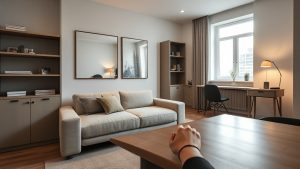
You move into a rental and within a week it still feels like a show flat. The walls are magnolia, the floors are bare, the light is a cold white, and every personal thing you own seems to be sitting awkwardly in the corner waiting for permission. It’s not that the place is bad. It’s that it doesn’t feel yours. The good news is that you don’t need to repaint, drill, or beg the landlord for anything to change that. Almost every cosiness problem in a rental has a temporary, reversible fix, and most of them cost less than a takeaway for two.
This is a troubleshooting guide, not a decorating mood board. We’ll look at what actually makes a room feel cold, then work through lighting and warmth, walls you can’t paint, the soft stuff that carries most of the weight, and finish with a checklist you can run through in an afternoon. Everything here is renter-friendly: nothing permanent, nothing that needs permission, and nothing that leaves a mark when you move out.
First, Work Out What Actually Feels Cold
Before you buy anything, stand in each room and ask what’s doing the damage. Cosiness is usually lost to one of four things, and they’re often confused with each other. The first is colour temperature: a bulb rated at 6000K throws a blue-white light that makes even a warm room feel clinical. The second is hard surfaces. Bare laminate, tile, and painted plaster bounce sound and light around, which reads as echoey and impersonal. The third is bare floors and windows, which pull heat away from your feet and let draughts in. The fourth is visual emptiness: a room with nothing on the walls and nothing personal in sight will feel like a waiting room no matter how warm it is.
Walk through your flat and note which of these applies to each room. Bedrooms are usually a lighting and soft-furnishing problem. Living rooms are often a sound and bare-wall problem. Hallways and kitchens tend to be the worst offenders for cold light and hard floors. Once you know what’s wrong, you can fix it in the right order instead of buying a throw blanket and hoping.
Lighting and Warmth: The Fastest Wins
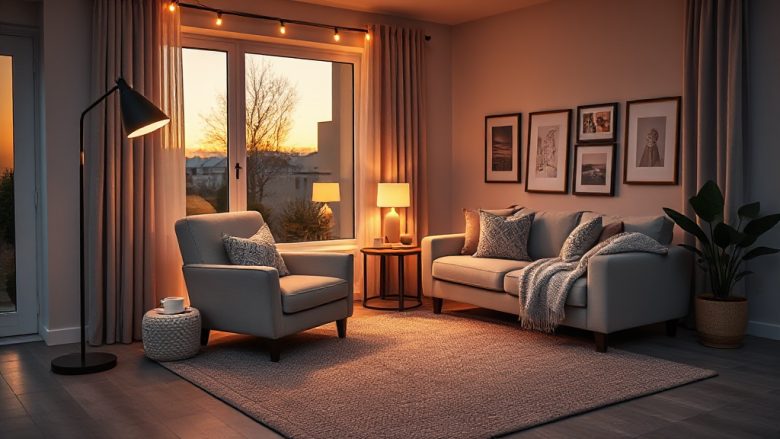
Lighting is the single most effective change you can make in a rental, and it’s completely reversible. Swap any cool white bulbs for warm white ones rated around 2700K. If your ceiling fixture is the only light source, stop using it as your main light. A floor lamp in a corner, a small table lamp on a sideboard, and a lamp on each bedside table will do more for atmosphere than any paint colour. Aim for three light sources at different heights in a living room rather than one bright overhead. Layered light creates shadows and pools of warmth, which is what your brain reads as cosy.
If you can’t change the fixtures themselves, plug-in dimmers and smart bulbs that sit in the existing socket are both options that travel with you. Battery-powered lamps and rechargeable table lights are also worth knowing about if you have no sockets where you need them, though you’ll be charging them regularly.
Warmth is the next layer, and draughts are the enemy. Removable draught excluders for the bottom of doors cost very little and make a noticeable difference in hallways and bedrooms. For windows, thermal or heavy curtains hung on an extendable tension rod are a renter’s best friend, because they need no drill holes and can be taken down in seconds. If your windows are single-glazed, a removable window film kit adds an insulating layer and peels off cleanly when you leave. Keep it simple: block the draughts you can feel with your hand, and leave the rest.
One more thing worth checking is your heating controls. If the radiators have thermostatic valves, turning down the rooms you don’t use and keeping the ones you do slightly warmer makes the whole flat feel more comfortable without costing more. If the heating is on a fixed schedule you can’t change, a small oil-filled radiator in the room you actually sit in is a reasonable temporary addition.
Temporary Wall Treatments When You Can’t Paint
Bare walls are the main reason a rental feels impersonal, and the usual advice, just paint it, isn’t available to most tenants. Fortunately, you don’t need paint to add warmth and texture. The trick is to cover the wall in something removable and to do it in a way that doesn’t damage the surface underneath.
Peel-and-stick wallpaper is the obvious choice, but choose carefully. Cheap versions can pull paint off when removed, so test a small patch in a hidden corner first and leave it for a week before committing. Removable fabric wall panels, hung with damage-free adhesive strips, are gentler and add real texture. A large fabric hanging or a lightweight tapestry does the same job and can be moved between rentals.
Gallery walls are another renter-friendly option, but skip the nails. Damage-free adhesive hooks hold surprising weight if you follow the instructions and clean the wall first. Group frames tightly rather than spreading them out, and mix sizes so it looks collected rather than accidental. If you’re nervous about adhesive strips, a picture ledge resting on a piece of furniture, or a large framed print leaning against the wall on a sideboard, gives you the same effect with zero fixing.
Don’t overlook the walls you already have. A large mirror, propped or hung with adhesive strips, bounces light around a dark room and makes it feel bigger and warmer. A woven wall hanging, a fabric noticeboard, or even a well-placed piece of fabric over a bland headboard adds softness without a single hole.
Soft Furnishings, Texture and Scent Do the Heavy Lifting
If you only do one thing from this article, do this: add soft things. Hard surfaces are what make a rental feel cold, and soft furnishings absorb sound, hold warmth, and add the visual texture that makes a room feel lived in. Start with the floor. A large rug that covers most of the floor in a living room or bedroom is transformative, and it doesn’t need to be expensive. Look for something with a bit of pile rather than a flatweave, and go bigger than you think. A rug that’s too small makes a room look smaller and more awkward.
Next, layer your soft furnishings. Cushions on the sofa and bed, a throw over the arm of a chair, heavier curtains at the windows. Mix textures rather than matching everything: a chunky knit, a smooth cotton, a velvety cushion, a linen throw. This is where a rental starts to feel like yours, because texture is personal in a way that paint colour isn’t. Bedding is worth spending a little more on, too. A linen or brushed cotton duvet cover and a couple of extra pillows make a bedroom feel like a hotel rather than a spare room.
Scent is the final piece and the one people forget. A room can look warm and still feel cold if it smells of nothing. A diffuser, a candle, or a simmer pot on the hob all work. Choose something warm and slightly sweet, like vanilla, amber, or woodsmoke, rather than sharp citrus or anything that smells like cleaning products. If you’re worried about candles and deposits, a reed diffuser or a plug-in warmer is safer. Keep the scent light. One or two sources in a flat is plenty; more than that and it starts to feel like a shop.
Plants are the last cheap trick. A couple of real or realistic plants add life and softness, break up hard corners, and give the eye somewhere to rest. Choose low-maintenance varieties if you travel or forget to water things, and put the taller ones in corners where the wall feels emptiest.
A Quick Renter-Friendly Checklist
If you want to do this in one afternoon, work through it in this order and stop when the room feels right. You don’t need all of it, and you certainly don’t need to spend much.
- Swap cool white bulbs for warm white ones, and add two or three lamps at different heights.
- Block the draughts you can feel, and hang heavier curtains on tension rods.
- Add one large rug to the room you use most, then layer cushions and a throw.
- Cover one bare wall with removable wallpaper, fabric, or a tight group of frames on adhesive hooks.
- Add a diffuser or candle in a warm scent, and one or two plants in empty corners.
None of this touches the fabric of the building, and all of it comes with you when you leave. That’s the real advantage of decorating a rental this way: you’re not improving your landlord’s property, you’re building a home that travels. Start with the lighting and the soft things, because they give you the biggest change for the least effort, and add the rest as you go. A rented flat can feel warm, personal, and genuinely yours. It just takes a bit of layering rather than a paintbrush.