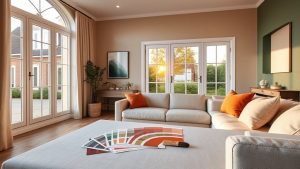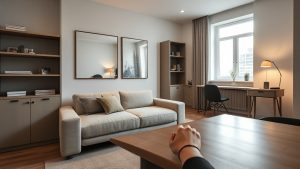
A small living room with a small budget is a familiar squeeze. You want the space to feel calm, roomy and finished, but every furniture shop seems to sell sofas built for a barn, and every decor account shows rooms that cost more than your deposit. The good news is that the biggest wins in a compact living room rarely come from new purchases at all. They come from how you arrange what you already own, how you light it, and how much texture you layer in before you spend a single pound. Below are small living room decor ideas on a budget that you can start this weekend, in the order that makes the most difference.
Assess your space before you buy a single thing
Stand in the doorway of your living room and look at it as if you were seeing it for the first time. Most of us stop noticing the obvious after a few months: the chair that blocks the walkway, the coffee table that eats half the floor, the shelf of things nobody has touched since you moved in.
Measure the room properly. Write down the length and width, then note where the doors swing, where the radiators sit and where the natural light falls at different times of day. That last detail matters more than most people realise. A room that feels gloomy at 4pm in winter is usually a lighting problem, not a size problem, and it can be fixed for the price of a bulb.
Next, make a list of everything in the room and mark each item as keep, move or let go. Be honest. A bulky armchair you never sit in is costing you floor space every single day. If you are renting, you may not be able to remove a fitted cupboard or change the carpet, so work around those fixed points rather than fighting them.
Once you know what you are keeping, you can plan around real constraints instead of guessing. That alone stops most wasted spending on decor that never quite works.
Rethink the layout so the room breathes
Layout is free, and it is the single most powerful tool you have. A small room arranged well will always feel bigger than a larger room arranged badly.
Start by pulling furniture away from the walls. It sounds counterintuitive, but floating a sofa even twenty centimetres into the room often makes the space feel wider, because you can see floor behind it. If your sofa currently sits flush against a wall with a coffee table jammed in front, try angling it slightly towards the fireplace, the window or the television. Angles break up boxy shapes and make a narrow room read as more generous.
Choose one clear walking route from the door to the window and keep it completely clear. Nothing kills a small room faster than having to sidestep a footstool every time you cross it. If a piece of furniture sits in that path, it either moves or it goes.
Think about scale, too. A single large rug that sits under the front legs of your sofa and chairs will make the seating area feel like one deliberate zone. Several small rugs scattered about will do the opposite and make the floor look chopped up. If you cannot afford a big rug yet, use one medium rug and let the bare floor around it act as breathing space.
Finally, look up. Anything you can move off the floor is a win. Wall-mounted shelves, a slim console instead of a bulky sideboard, a hanging plant instead of a floor pot. Floor space is the currency of a small living room, so spend it carefully.
Lighting on a budget changes everything
Bad lighting is the most common reason a small living room feels cramped, and it is usually the cheapest thing to fix. One bright ceiling light in the middle of the room flattens everything and casts harsh shadows into the corners, which makes the walls feel closer than they are.
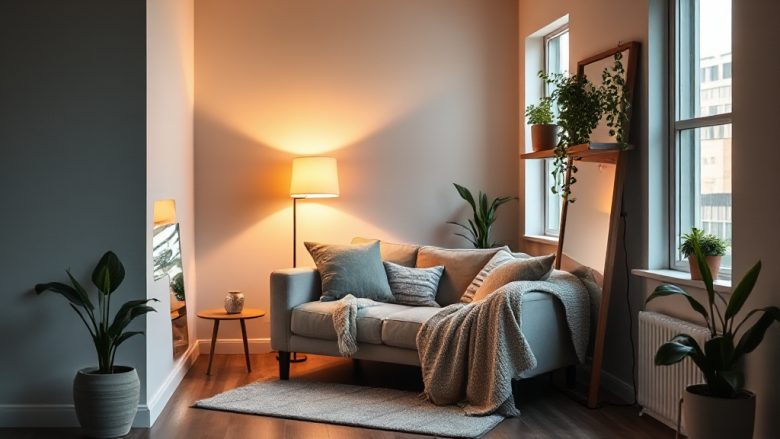
Instead, build layers. Aim for three sources at different heights: a floor lamp or a table lamp in a dark corner, a smaller lamp on a side table, and a warm bulb overhead on a dimmer if your landlord allows it. If a dimmer is not an option, a plug-in dimmer socket costs very little and works with most lamps.
Swap cool white bulbs for warm white ones. This is a tiny change with a huge effect. Cool light makes a room feel clinical and small; warm light makes it feel soft and inviting, and it flatters every colour you already have.
Use mirrors deliberately. A mirror placed opposite a window will bounce daylight into the room and effectively double the view. A mirror hung too high, or in a dark corner with nothing to reflect, does very little. Lean a large mirror against the wall if you cannot drill, and check that it is reflecting something worth seeing, like a plant, a lamp or the window itself.
If you want one more trick, put a small lamp behind a plant or a vase. The shadow it throws onto the wall adds depth and makes the room feel like it extends further than it does.
Texture and textiles do the heavy lifting
When a room feels flat, it is almost never a colour problem. It is a texture problem. Adding softness and contrast makes a small space feel layered and expensive without spending much at all.
Start with curtains. Hanging them as high as you can and letting them fall to the floor makes the ceiling look taller and the window look bigger. If you already own curtains that stop short, a cheap fix is to move the pole up and outwards so the fabric frames the window rather than covering it. Wider than the window, taller than the frame, always.
Then add cushions in mixed fabrics: a linen cover, a chunky knit, a smooth velvet. Two or three in different textures will do more for a sofa than five in the same material. Cushion covers are one of the cheapest decor swaps around, and you can change them with the seasons without replacing the inserts.
A throw draped over the arm of a chair softens hard lines and adds a bit of colour. A textured rug underfoot warms a cold floor. Even a woven basket for blankets gives the eye something interesting to rest on and hides clutter at the same time.
Keep the colour palette tight while you do this. Two or three related tones plus one accent will always look calmer and more spacious than a rainbow. In a small room, restraint reads as roominess.
DIY and thrifted accents with real character
This is where a small budget becomes an advantage. Mass-produced decor looks the same in every flat, and it rarely fits a small room’s awkward corners. Thrifted and handmade pieces usually do.
Charity shops, car boot sales and online marketplaces are full of small side tables, mirrors, frames and lamps that cost a fraction of new prices. Look for solid wood rather than veneer, and check that drawers run smoothly and lamps actually switch on. A tired wooden stool sanded back and given a coat of paint becomes a bedside table or a plant stand for very little.
Framed prints are easy to make yourself. Cut images from old books, magazines or wrapping paper, mount them on card and put them in cheap frames. Group them in a tight grid rather than spreading them across the wall, because a single cluster reads as one object and takes up less visual space than scattered pictures.
Plants are the other cheap win. A trailing plant on a high shelf draws the eye upward and makes the ceiling feel higher. If you struggle to keep plants alive, a dried arrangement or a few stems in a charity-shop vase gives the same effect with no maintenance.
One word of caution: keep surfaces mostly clear. In a small room, every object you display competes for attention, so choose fewer things and give them space.
A quick weekend checklist to pull it together
If you only have a couple of days, work in this order and stop when the room feels right.
- Clear the walking route from door to window and move anything that blocks it.
- Pull the sofa slightly away from the wall and angle it if the room allows.
- Swap one harsh overhead bulb for a warm white one and add a second lamp in the darkest corner.
- Hang curtains higher and wider, or move the pole up if you already have them.
- Add one textured cushion, one throw and one plant at height.
- Clear every surface down to a few deliberate objects, then step back and look.
None of this requires a big spend. It requires attention. A small living room rewards care far more than it rewards money, and the changes that make the biggest difference are usually the ones you can make today with what is already in the room. Start with the layout and the lighting, layer in texture as you find it, and let the space tell you what it still needs. More often than not, the answer is less, not more.